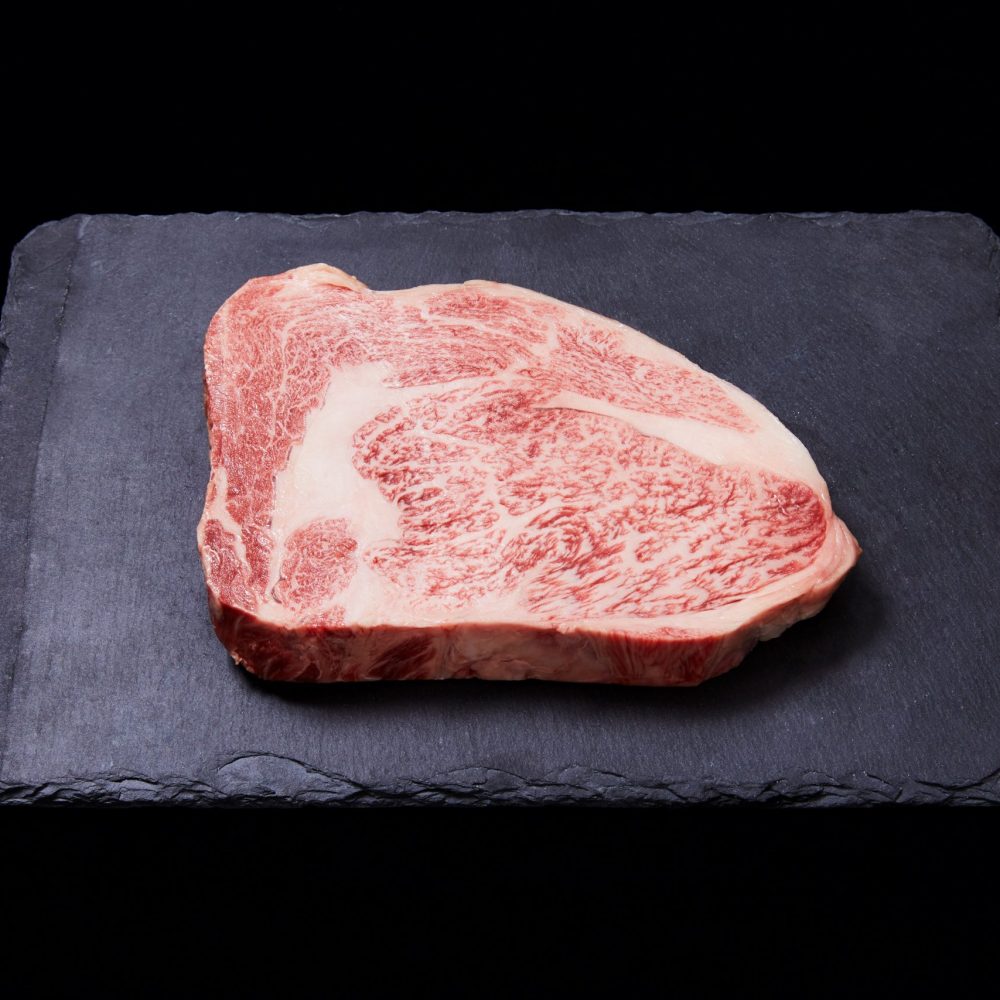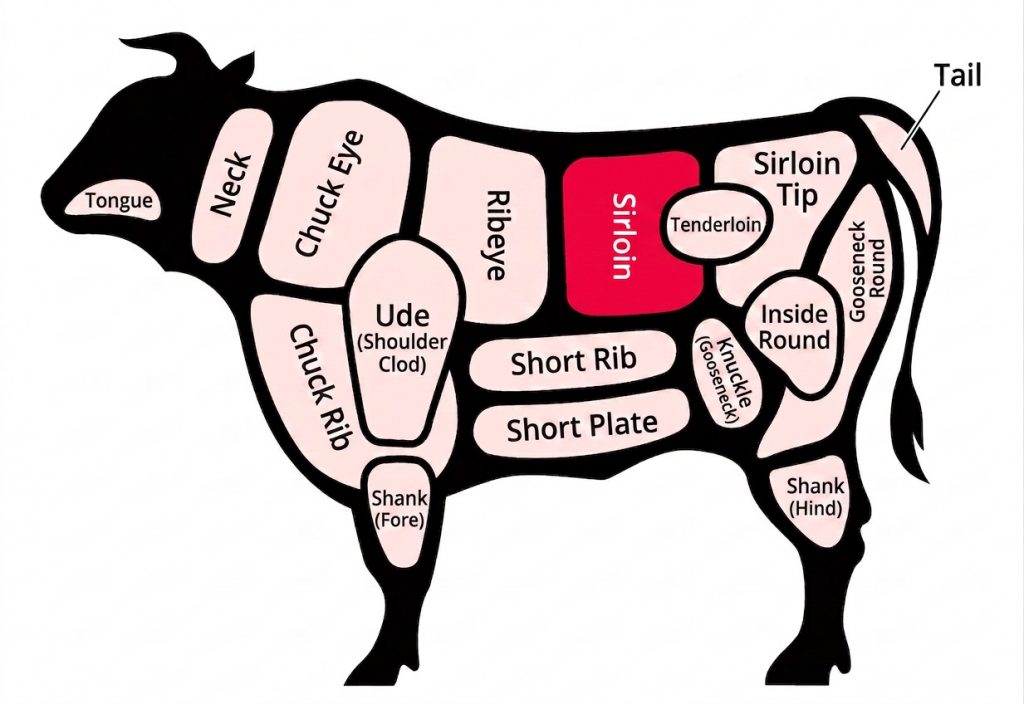
Sirloin is a cut of beef taken from the back of the cow, specifically from the area between the ribs and the lower back.Cattle have 13 ribs, and sirloin typically comes from the section around the 11th to 13th ribs.
Interestingly, this is also the part on the human body where people tend to gain a bit of extra weight—if you know what I mean! (haha)
Because this area doesn’t get much movement, it develops excellent marbling—the fine streaks of fat within the meat that create flavor and tenderness.
Sirloin is widely regarded as one of the most premium cuts of beef due to its:
There’s actually a well-known story behind the name.
It is said that a British king was so impressed by the deliciousness of this cut that he awarded it the title “Sir,” like a knight—hence the name “Sir-loin.”
(“Loin” simply refers to the lower back of the animal.)
When it comes to Japanese Wagyu, sirloin is one of the best cuts to truly appreciate:
The color can vary significantly—from pale pink to a deeper, almost red-bean color—depending on the region and breed.
From experience, beef from western Japan (Kansai to Kyushu) tends to be lighter and pinker, while northern regions (like Tohoku) often produce deeper-colored meat.
(Just a general observation 😉)
Personally, I prefer the darker, reddish cuts.
Brands like Yamagata Beef and Yonezawa Beef often have this style, offering a deeper, richer umami flavor.
Lighter pink cuts can look beautiful due to the marbling, but sometimes they lack that deep, meaty flavor.
Especially with Wagyu, sirloin is considered the king of steak cuts.
It’s a must-have at:
Without sirloin, the menu just wouldn’t feel complete.
The sirloin you typically see served at restaurants is carefully trimmed.
From the original cut, about 40% is removed—including excess fat and connective tissue.
This means:
👉 That’s why it becomes one of the most expensive cuts, along with filet.
Most people don’t buy whole sirloin blocks for home cooking, but honestly—it’s not that difficult to prepare.
If you want a bold and luxurious steak experience, buying a whole block is definitely worth trying.
You might wonder if the trimmed parts go to waste.
Don’t worry—most of them are used for:
You’ve probably seen T-bone steaks in stores.
That cut is actually:
👉 Sirloin + Filet attached to the bone
The T-shaped bone includes the spine and rib section, and both cuts are cooked together for a bold, flavorful steak.
Pretty luxurious, right?
Sirloin is a premium cut that delivers:
Especially with Wagyu, it’s truly one of the best cuts you can enjoy.
If you get the chance, try buying it as a block and cooking it yourself for a truly indulgent experience.