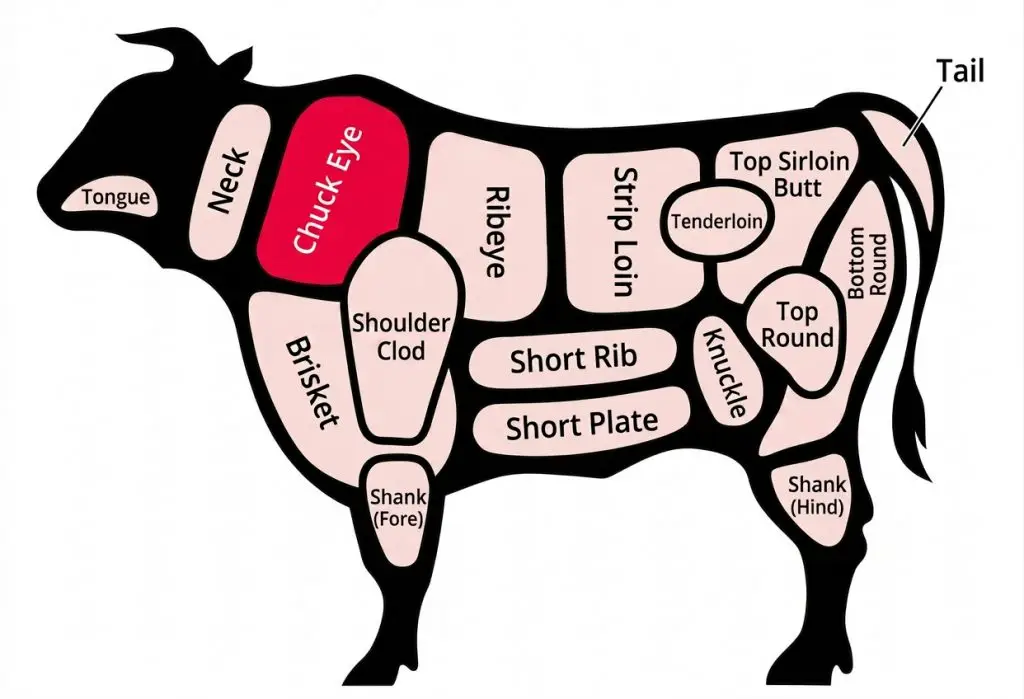
Did you know that the word “Loin” in Japan (Rosu) actually comes from the word “Roast”? True to its name, this is a category of cuts that tastes absolutely phenomenal when roasted or grilled. While we often bundle it under one word, “Rosu” is actually split into three legendary primal cuts: Chuck Eye (Kata-Rosu), Ribeye (Ribu-Rosu), and Sirloin.
The ultimate crowd-pleaser. Sirloin is incredibly tender, boasts an elegant flavor, and lets you experience the pure majesty of high-quality beef. Legend has it that King Henry VIII of England found it so delicious that he literally knighted the cut, calling it “Sir” Loin. (Check out our dedicated article for the full story!)
The “Rib” in Ribeye refers exactly to that—the rib cage area. This cut is famous for its gorgeous marbling, fine texture, minimal gristle, and rich, melt-in-your-mouth fat. It is the absolute king of steaks. Stay tuned, because we will be doing a deep-dive on the Ribeye very soon here at the Beef Information Bureau!
The Chuck Eye covers the area spanning from the shoulder to the back, right next to the neck.
In the Kansai region of Japan, it’s traditionally called “Kurashita” (which translates to “under the saddle”), because this is exactly where a saddle would sit on a horse or steer. In the US, it’s most commonly known as the “Chuck Eye.” The Chuck Eye is an absolute unit of a cut. Excluding the brisket and plate before fabrication, a single side can weigh a massive 20 to 30 kg (about 44 to 66 lbs)! Whoa, that’s huge! 😲
Because it’s so massive, it’s no surprise that the meat quality changes dramatically from one end to the other. The side closer to the neck is heavily exercised and leaner, while the side transitioning into the ribeye becomes beautifully marbled. The defining signature of this entire cut is its intensely deep, savory lean beef flavor.
(Curious about the Neck portion? Check out our deep dive here! [Link])
When a butcher meticulously breaks down this massive Chuck Eye, two highly coveted, premium hidden gems emerge: Zabuton and the Chuck Eye Log (Kata-Rosu Shin).
You might already be familiar with this popular star! In Japan, it’s named Zabuton (traditional Japanese floor cushion) because of its flat, square shape.
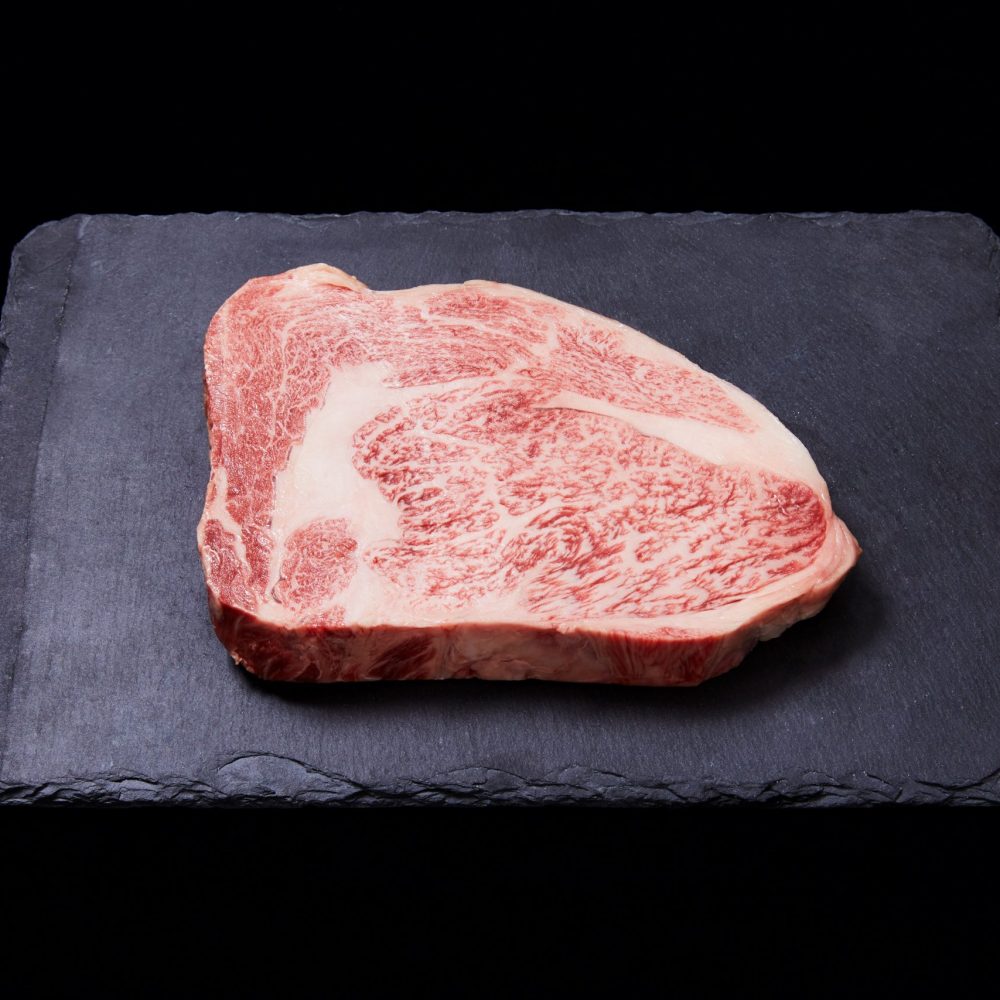
When it comes to look, flavor, and texture, this is the undisputed King of Yakiniku. It features such luxurious, dense marbling that many high-end restaurants prize it even over standard loin cuts.
As the name implies, this is the very center “core” of the Chuck Eye. Usually, the neck-side half is designated for stews, and the center is sliced for Yakiniku. That means the portion perfect enough to be cut into premium steaks is incredibly limited. As the block tapers off, you can usually only harvest about 3 to 4 prime steaks from the entire thing.
Talk about scarce! 💎
In fact, most traditional butchers prefer not to break the Chuck Eye down into these tiny pieces. Why? Because while the Zabuton and the Core fetch a premium price, the remaining trimmings usually get downgraded to basic ground beef or stew meat. This means finding a butcher who deliberately harvests pure Zabuton and Chuck Eye Core is a true sign of a rare, high-end luxury experience.
Overall, the Chuck Eye offers a beautiful balance of moderate fat, rich marbling, and deeply concentrated lean beef flavor. Because it yields massive, gorgeous slices, it is highly recommended for classic Japanese dishes like Sukiyaki.
Since the meat profile shifts so much across its long shape, let’s break it down into three sections: Neck-Side, Center, and Ribeye-Side.
| Zone | Texture & Characteristics | Best Culinary Use |
| 1. Neck-Side | Leaner, firmer, with more connective tissue. This is where the “Chuck can be tough” rumor comes from! However, because it’s close to the neck, it packs the most intense beef flavor. | When properly trimmed or sliced ultra-thin, it becomes wonderfully tender. Perfect for a beef-focused Sukiyaki or Shabu-Shabu. |
| 2. Center | The ultimate golden zone. A flawless, harmonious balance of lean beef flavor and rich marbling. This area holds a large portion of the rare Zabuton. | Thinly sliced for quick searing, allowing you to enjoy both the deep beefiness and the sweet melt of the marbling. |
| 3. Ribeye-Side | Ultra-tender with spectacular, fine marbling. It shares almost the exact same luxurious quality as its neighbor, the prime Ribeye. This is where the prized Chuck Eye Log shines. | Premium steaks or high-end Yakiniku. It practically melts on your tongue. |
When you go to the supermarket or a local butcher, they rarely label packages as “Neck-side only” or “Ribeye-side only.” They are usually all labeled under “Chuck Eye” (Kata-Rosu).
Your best strategy? Look closely at the marbling. * If you prefer rich, buttery, melt-in-your-mouth fat: Look for the slices with heavy, web-like marbling (or swap it out entirely for a premium Ribeye).
The versatility of the Chuck Eye is unmatched. Beyond standard steaks and Yakiniku, it holds up beautifully to Japanese simmering methods.
When you get those large, beautiful, wide-cut sheets of Chuck Eye, they are absolutely incredible for Shabu-Shabu, Sukiyaki, quick stir-fries, Nikujaga (beef and potato stew), and Shigureni (ginger-simmered beef). Slicing it thin and letting it gently simmer allows the rich umami of the beef to melt into the broth, creating an incredibly deep, comforting flavor.
The Chuck Eye is a massive, legendary 20–30 kg cut. Because the texture and marbling gradually shift from the lean, savory neck-side to the buttery, tender ribeye-side, it offers an incredible spectrum of flavors in a single cut.
It truly is the best of both worlds—combining the intense flavor of lean beef with the luxurious tenderness and sweetness of premium marbling.