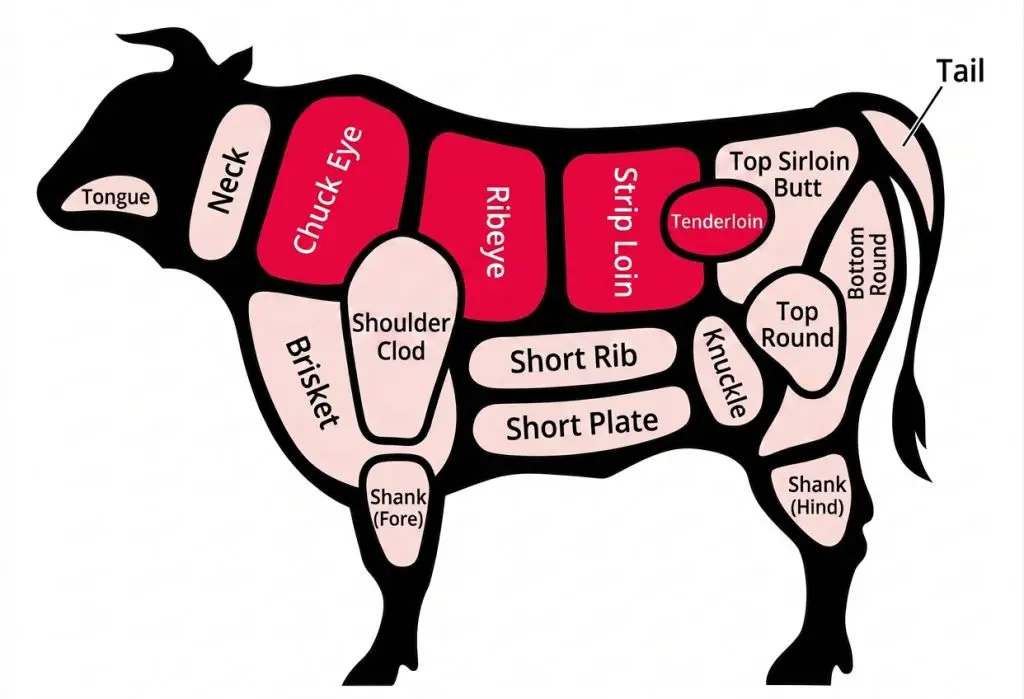
The word “loin” comes from the concept of “roast”—meaning cuts that taste especially good when cooked over heat.
In general, what people call “loin” is actually divided into three main cuts:
Each has its own unique texture, flavor, and ideal cooking method.
Sirloin is known for its tenderness and rich, beefy flavor.
It’s one of the most balanced cuts—it’s not overly fatty, yet still incredibly juicy and satisfying.
There’s a famous story that a British king was so impressed with this cut that he gave it the title “Sir,” which is how the name Sir-loin came to be.
The “rib” in ribeye refers to, of course, the ribs.
This cut is:
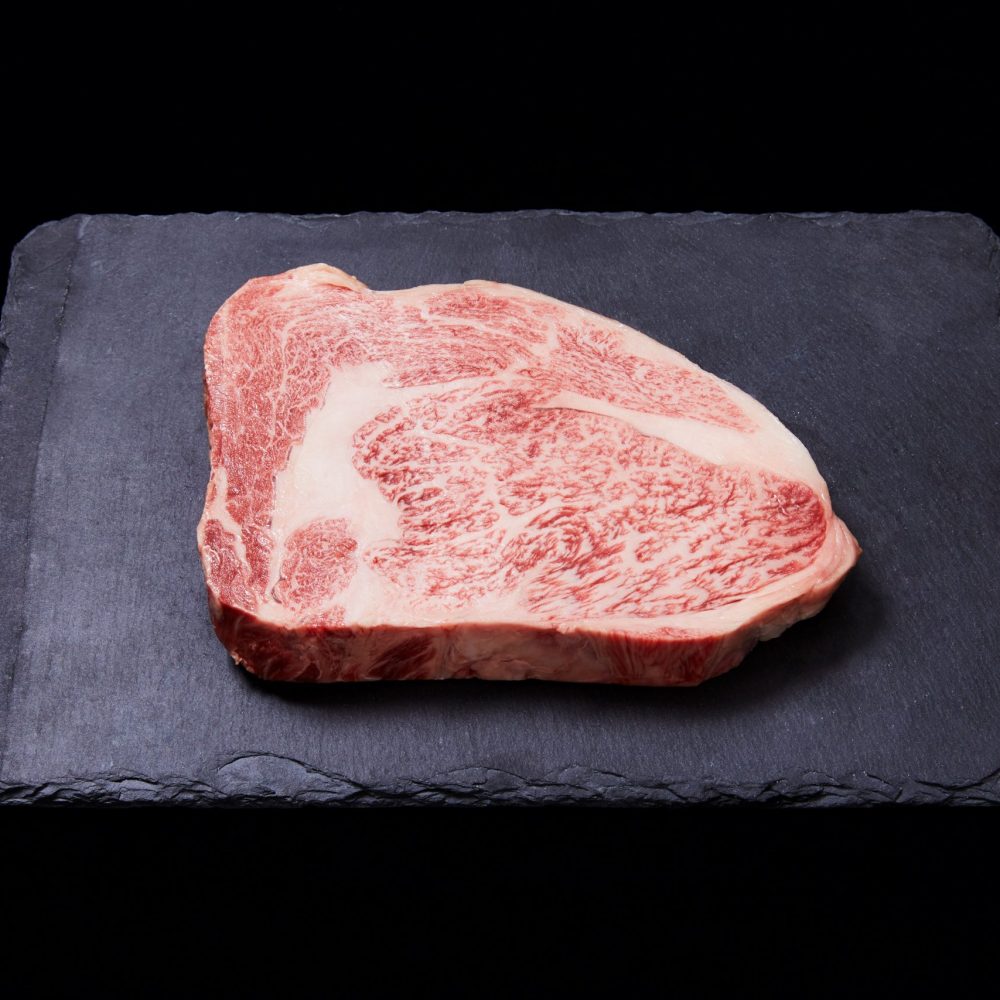
Because it contains beautiful marbling and very little connective tissue, it’s one of the best cuts for steak.
I’ll go into much more detail about ribeye in a future article!
Chuck Eye comes from the area between the neck and the back—closer to the shoulder.
In Japan, it’s sometimes called “kurashita”,
👉 Different names, same idea!
The name “kurashita” comes from the fact that this was historically the area where a saddle would sit on the animal.
Chuck Eye is actually one of the largest sections of the cow, weighing around:
👉 20–30 kg (44–66 lbs)
That’s huge!
What makes Chuck Eye interesting is that its texture changes depending on the location:
👉 This is why the quality of chuck Eye can feel very different depending on which part you’re eating.
Chuck Eye contains some incredibly prized sub-cuts:
👉 Some restaurants even rate it higher than standard loin!
This is the core of the chuck section and is surprisingly limited.
Only a few steak-quality pieces can be taken from each block.
👉 Translation?
Very rare.
When butchers break down the chuck Eye:
That’s why these premium pieces are hard to find.
Chuck Eyt has a unique advantage:
👉 It balances rich beef flavor and tender marbling
At supermarkets or butcher shops:
👉 You usually can’t choose specific sections (neck vs rib side)
So the key is:
✅ Look at marbling (fat distribution)
✅ Choose based on your preference
Chuck Eye is extremely versatile:
👉 Especially recommended:
Thin slices
They bring out both the flavor and tenderness beautifully.
Large, thin slices work especially well for:
When cooked this way, the beef releases its full umami flavor.
👉 In short:
Chuck Eye lets you experience multiple aspects of beef in one cut.
Whether you prefer rich marbling or deep beef flavor,
this cut has something for everyone.
👉 Next time you pick beef, take a closer look—
you might discover your new favorite cut.