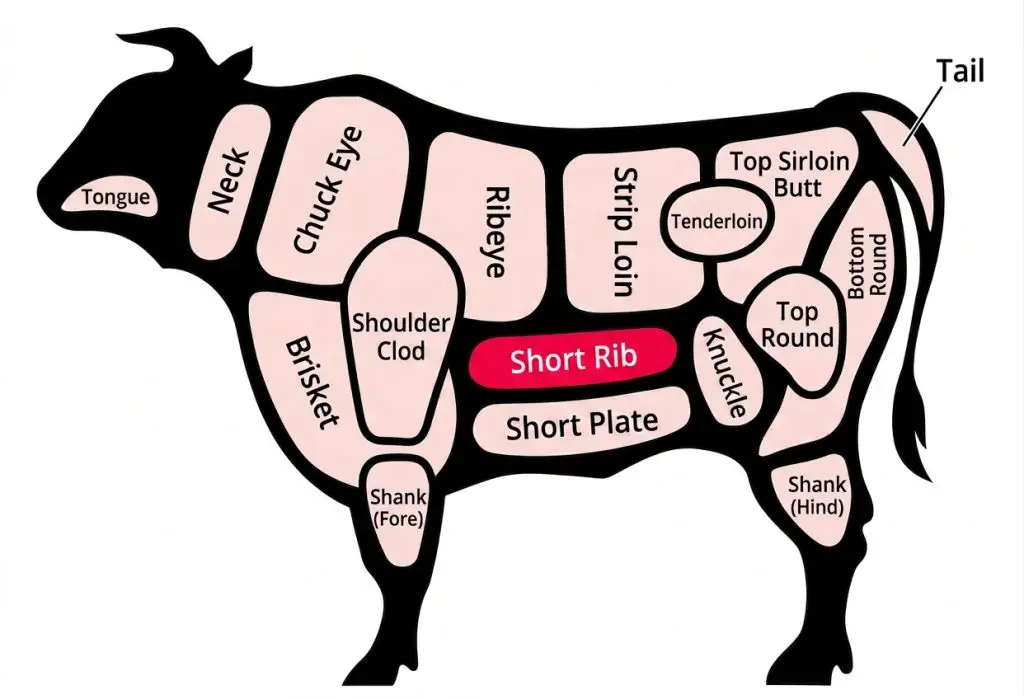
In Japanese butchery, the beef belly area is known as Tomo-Bara, which essentially means the meat surrounding the rib cage. When we split this large belly section horizontally down the middle, the upper half is called the Short Rib.
Because this is a well-exercised area, the meat features a slightly coarse grain with plenty of muscle fibers and natural membranes. However, don’t let that fool you—the lean meat and fat intertwine flawlessly to create a deeply rich, intensely flavorful profile. Packed with sweet, luscious marbling, this entire section is practically destiny-made for the grill! 🔥
From this premium Short Rib primal, butchers harvest two legendary Yakiniku staples: Nakaochi Kalbi (Rib Finger Meat) and Kainomi (Flap Bavette).
Nakaochi Kalbi refers to the succulent morsels of meat nestled directly between the rib bones (commonly known as rib fingers in Western butchery).
Because removing this meat from between the bones requires meticulous hand-work, it takes a bit of time to prep. It’s a relatively rare cut, yielding only a small amount per steer. Yet, because it remains remarkably budget-friendly despite its scarcity, it has earned a permanent spot as a fan-favorite on almost every Yakiniku restaurant menu.
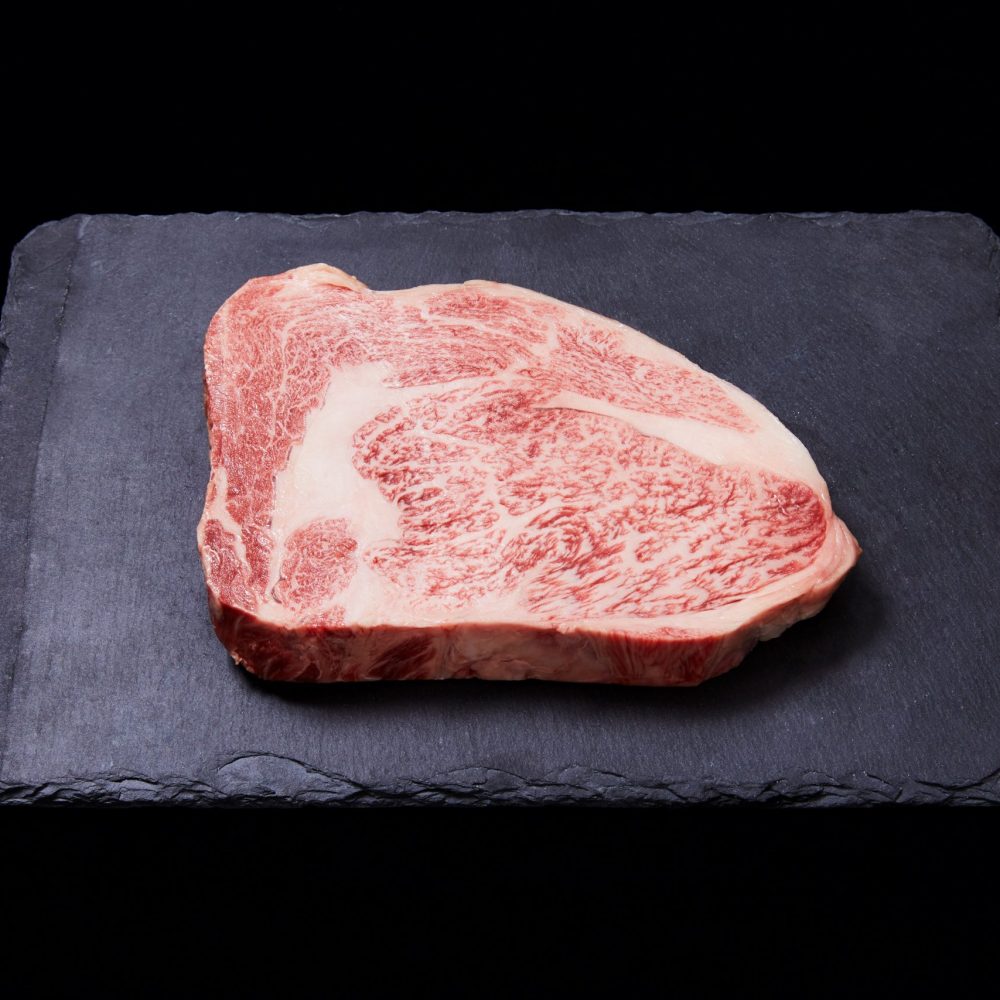
Being a core part of the belly family, the meat itself packs a powerful punch of concentrated beef flavor. Simultaneously, it is loaded with spectacular marbling, sending its rich, juicy decadence straight to the absolute maximum level!
For younger meat lovers, this ultimate juiciness is exactly what dreams are made of. On the flip side, older foodies might sometimes find standard belly fat a bit too heavy.
However, when you taste Nakaochi Kalbi from meticulously raised, premium cattle, the fat is remarkably clean, allowing you to purely enjoy the stunning depth of the beef without any of the grease fatigue.
What is Kainomi (Flap Bavette)?
Kainomi is a highly prized cut harvested from the innermost section of the Short Rib.
Anatomically, Kainomi sits right toward the hind-leg side of the belly, directly adjacent to the Tenderloin (Hire). Because of this prime real estate, it acts as the ultimate hybrid—combining the best features of both short rib and tenderloin into one miraculous cut.
It offers the lean, ultra-tender texture of a premium steak alongside the rich, sweet marbling of a juicy short rib. The flavor is incredibly upscale and luxurious, yet never greasy.
In Japan, it’s famous for a texture so delicate that if you chew it just five times, it completely melts away, as if the meat itself is turning into pure savory liquid gold.
When preparing it for Yakiniku, you don’t need to skimp on the thickness—go ahead and cut it into generous, thick slices (we highly recommend at least 5mm or thicker to lock in the juices).
The real charm of Kainomi is its incredible versatility. It pairs beautifully with everything from rich, bold sauces to a simple, clean pinch of sea salt. As for drinks? It is a hospitality champion that welcomes whatever you are pouring—be it Sake, a fine wine, a crisp beer, or Japanese Shochu. It’s an all-around crowd-pleaser with an incredibly welcoming personality.
At the end of the day, the Short Rib is a cut where the quality of the fat truly shines, making it an elite superstar of the grilling world.